






Quick answer: Power banks are safe when properly used. Warm during charging is expected. Swelling, strange smells, or excessive heat require immediate action. Choose power banks with safer battery architecture, follow basic care practices, and know when replacement is necessary.
What's Normal vs What's a Warning Sign
Most power bank safety concerns come from not knowing what typical behavior looks like.
Normal Behavior
Warmth during use: Energy transfer creates heat. Your power bank will feel warm when charging a device or recharging itself. This is physics, not a defect.
Charging slowdown at high battery levels: Your phone charges fast from 0-50%, slows noticeably from 50-80%, and crawls from 80-100%. This is intentional battery protection, not a power bank problem.
Gradual capacity loss over time: Power banks are rated for 300-500 charge cycles. After 500 full cycles, capacity typically drops to around 80% of original. A power bank that gave you two full charges when new might give 1.6 charges after two years of daily use. This is expected degradation.
Warning Signs (Stop Using Immediately)
Swelling or bulging case: If your power bank feels puffy or seams are separating, stop using it immediately. Internal pressure buildup indicates cell failure.
Too hot to hold comfortably: Warm is normal. Too hot to hold for more than a few seconds is not. If you can't comfortably hold the unit, something's wrong.
Chemical or burning smell: Any unusual odor is a red flag. Stop using the unit and move it to a safe location away from flammable materials.
Rapid self-discharge: A fully charged power bank should hold its charge for weeks. If it drops to empty in a day or two without use, there's likely an internal short.
Visible damage: Cracks in the case, damaged ports, or exposure to liquid all compromise safety. Replace the unit.
How Power Bank Fires Actually Start: The Thermal Runaway Process
Understanding the mechanism helps you assess real risk versus media fear-mongering.
The Chain Reaction
Step 1: Internal short circuit
Physical damage, manufacturing defect, or compression causes positive and negative terminals to touch inside a cell. This creates a short circuit.
Step 2: Rapid heating
The short generates intense heat in seconds. This is where battery architecture becomes critical.
Step 3: Electrolyte involvement
In traditional lithium-ion batteries, liquid electrolyte heats up and begins to vaporize. This creates pressure inside the sealed cell.
Step 4: Thermal runaway
Heat + vaporized electrolyte + pressure = potential fire or explosion. The heat from one cell can trigger adjacent cells, creating a cascading failure.
Step 5: Uncontrolled escalation
Once thermal runaway begins in liquid-electrolyte cells, stopping it is extremely difficult. This is why airlines take lithium batteries so seriously.
Why Battery Architecture Matters
Traditional lithium-ion batteries rely on liquid electrolyte for ion movement. When that liquid heats up, it becomes vapor and fuel. This is the fundamental problem - the very material needed for the battery to function becomes the accelerant in thermal runaway scenarios.
The liquid electrolyte problem:
- Conventional lithium-ion batteries are filled with liquid electrolyte
- Under heat or damage, this liquid vaporizes rapidly
- Vaporized electrolyte is highly flammable and creates internal pressure
- Once ignition begins, the reaction is self-sustaining and nearly impossible to stop
This is the core safety issue with traditional power banks. The architecture itself creates the risk.
How BMX Addresses Safety at the Architecture Level
This is exactly why BMX built SolidSafe around semi-solid-state battery cells - as a direct response to the documented fire risk in conventional lithium-ion portable chargers.
Semi-Solid-State Architecture Changes the Equation
Semi-solid-state batteries use a gel-like electrolyte with greatly reduced free-flowing liquid content - approximately 2.5% liquid versus the much larger amounts in conventional cells. The more viscous, gel-like electrolyte does not vaporize the same way under heat.
When damage occurs in a semi-solid-state cell, there's far less flammable liquid available to fuel thermal escalation. The cell may still heat up, but the likelihood of progression to full thermal runaway is greatly reduced by design.
What this means in real scenarios:
- Compression damage (crushed in overhead bin): Less liquid to create pressure buildup
- Internal short from drops: Reduced fuel available for fire propagation
- Manufacturing defects: Lower escalation risk if cells have internal flaws
- Extreme temperature exposure: More stable thermal behavior under stress
(No battery is risk-free. Semi-solid-state architecture helps reduce the likelihood that damage or an internal short escalates to fire, but abuse or severe damage can still be dangerous. Risk is reduced, not eliminated.)

SolidSafe drill penetration test - no smoke, no fire, no thermal runaway
Watch the SolidSafe drill test →
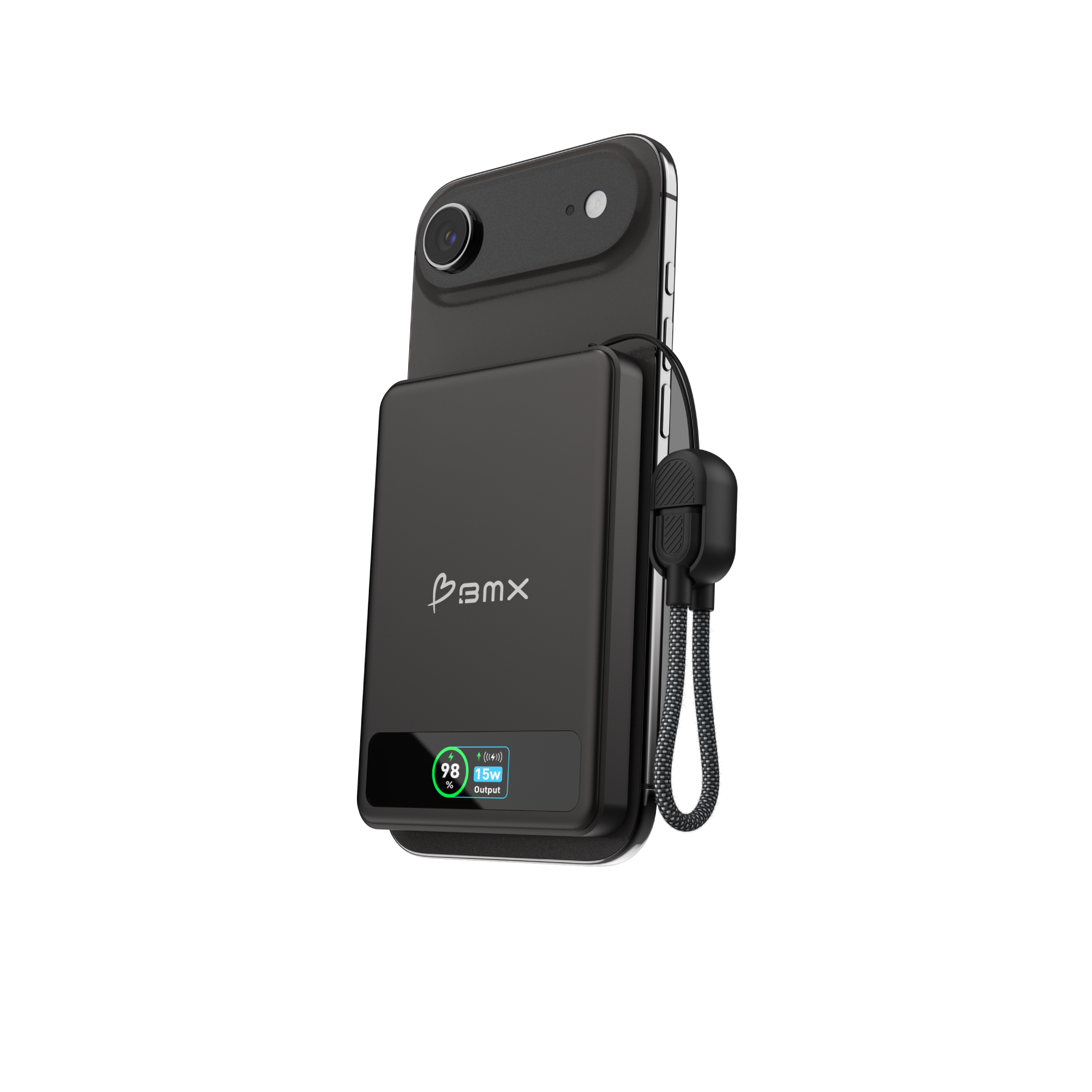
SolidSafe 5K - $79.99
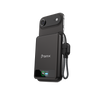
Semi-solid-state architecture for daily carry. 5,000mAh capacity with Qi2 15W magnetic wireless and 20W USB-C PD. TSA-approved at 19Wh - well under the 100Wh limit. One full phone charge in your pocket.
Shop SolidSafe 5K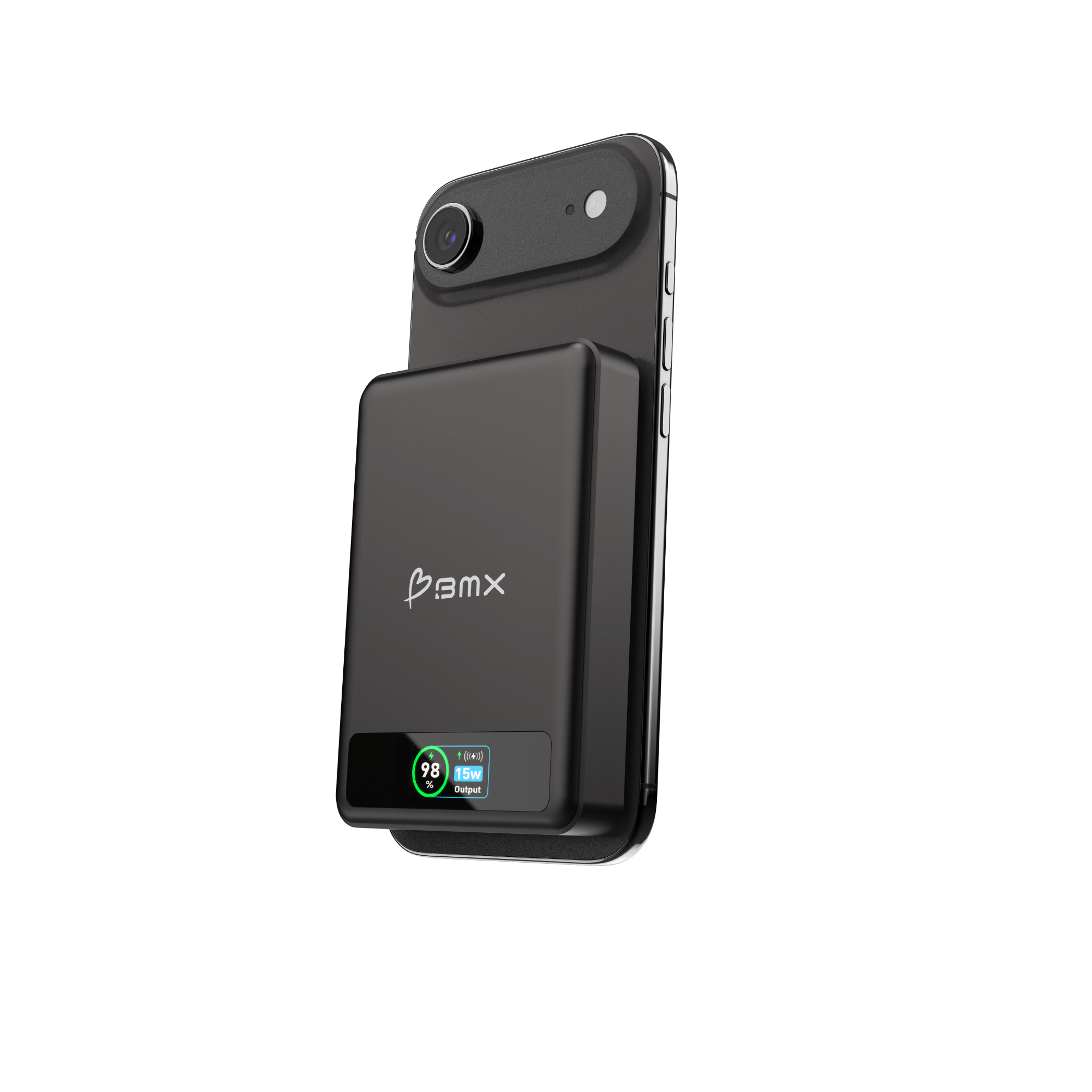
SolidSafe 10K - $99.99
Same semi-solid-state architecture, double the capacity. 10,000mAh with Qi2 15W wireless and dual 30W USB-C ports. 37Wh - comfortably under 100Wh limit. Two full phone charges for long travel days.
Shop SolidSafe 10KBoth models feature 2-year warranties and have been internally tested under puncture, crush, and thermal stress conditions. The semi-solid-state cells showed no smoke, no fire, and no thermal runaway - they heated momentarily, then stopped. Traditional lithium-ion cells ignited instantly under identical testing.
View all SolidSafe power banks →
Safe Charging Practices
Semi-solid-state architecture improves thermal stability and reduces escalation risk, but following proper charging, storage, and handling practices still matters. These guidelines help maximize safety and lifespan regardless of battery chemistry.
Overnight Charging: The Real Risk
Modern power banks have overcharge protection circuits that stop current flow at 100%. The risk of overnight charging is minimal with quality units.
What increases risk:
- Charging on soft surfaces (beds, couches) that trap heat
- Charging in extremely hot environments (above 95°F / 35°C)
- Using damaged or incompatible cables
Best practices:
- Charge on hard, non-flammable surfaces (desks, counters, nightstands)
- Ensure adequate airflow - don't cover the power bank with papers or fabric
- Use manufacturer-provided cables or certified replacements
- Avoid charging directly after heavy use - let the unit cool first
Where NOT to Charge
❌ In bed while sleeping - Heat + confined space + fabric = compounded risk
❌ Inside bags or enclosed spaces - No heat dissipation if problems develop
❌ On paper piles or clutter - Blocks airflow and creates fire hazard
❌ In direct sunlight - External heat compounds internal charging heat
✅ On open surfaces with airflow - Desks, counters, tables
Storage and Temperature: The Hidden Killers
Improper storage causes more power bank failures than most people realize.
Temperature Extremes
Heat damage:
Never leave power banks in cars during summer. Interior temperatures can exceed 140°F (60°C), which accelerates chemical degradation and increases fire risk. Even if the unit doesn't fail immediately, heat exposure shortens lifespan and compromises safety.
Cold effects:
Freezing temperatures temporarily reduce capacity but usually don't cause permanent damage. However, extreme cold (below 0°F / -18°C) can damage cells. If your power bank was exposed to freezing temps, let it warm to room temperature before charging.
Optimal Storage Conditions
For daily rotation: Room temperature (60-80°F / 15-27°C), 40-80% charge
For long-term storage: Cool, dry location, 40-60% charge
Why not store at 100%? Storing lithium batteries fully charged accelerates capacity loss. Storing at 0% can cause cells to drop below safe voltage thresholds and become unrecoverable.
When to Replace Your Power Bank
Performance Indicators
Capacity dropped below 70%: If your 10,000mAh bank now behaves like a 7,000mAh unit, it's approaching end of life.
Inconsistent charging: Works fine sometimes, stops mid-cycle other times.
Much longer recharge time: If recharge time doubles, internal resistance has likely increased significantly.
Physical Damage = Immediate Replacement
Any visible swelling: Stop using immediately. Swollen cells indicate internal failure and significant fire risk.
Cracks or case damage: Exposes internals to moisture, debris, and physical stress.
Port damage: Loose connections create arcing and localized heat.
Water exposure: Even if dried out, internal corrosion can cause delayed failures.
Cycle Count Reality
Most power bank manufacturers rate their products for 300-500 full charge cycles before dropping below 80% original capacity. Premium cells from reputable manufacturers can reach 500-1000 cycles.
What counts as a "cycle"? Using 100% of capacity = one cycle. Using 50% twice also = one cycle. If you use 30% daily and recharge, you're consuming roughly 0.3 cycles per day.
Example: Daily use at 30% depth per day = roughly 1000 days (nearly 3 years) to reach 300 cycles.
Travel Safety: Why Airlines Care (And What Changed in 2025)
Why Airlines Restrict Power Banks
Thermal runaway at 35,000 feet in a pressurized cabin is catastrophic. In the cargo hold, crew has no way to respond. In the cabin, they can act immediately.
Universal rule: Power banks MUST be in carry-on luggage. Never in checked bags.
Capacity Limits (Globally Consistent)
Under 100Wh: Automatically approved on virtually all airlines
100-160Wh: Airline approval required (usually granted, limited to 2 units per person)
Over 160Wh: Not allowed on passenger aircraft
Calculate Wh: (mAh x voltage) / 1000
Most power banks use 3.7V nominal voltage.
Example: 10,000mAh x 3.7V / 1000 = 37Wh (well under the 100Wh limit)
What Changed After Air Busan Flight 391
On January 28, 2025, a power bank in an overhead compartment ignited on Air Busan Flight 391 at Gimhae International Airport in South Korea. All 176 passengers and crew evacuated safely, but the aircraft was destroyed. Investigation results released in February 2025 found scorch marks on power bank debris, indicating insulation breakdown inside the battery triggered the fire.
The power bank was physically compressed in the overhead bin. This incident demonstrated that physical pressure on lithium batteries can create internal shorts even in otherwise safe units.
Policy changes starting March 2025:
- Power banks banned from overhead bins on many Asian carriers (must stay in seat pocket or under seat)
- Charging power banks onboard via USB ports prohibited
- Maximum 5 power banks per passenger on some airlines (previously unlimited under 100Wh)
- Some airlines require power banks in transparent bags or with taped terminals
Always check your specific airline's policy before flying. Rules vary significantly by carrier and region, and enforcement differs.
Packing Best Practices
- Keep power banks accessible for TSA inspection
- Store in protective cases or original packaging
- If carrying loose, tape over ports to prevent shorts from keys or coins
- Don't pack with loose metal objects
- Keep capacity documentation visible if over 20,000mAh
- Avoid compressing power banks in tightly packed bags
What People Get Wrong About Power Bank Safety
Myth: "All certified power banks are equally safe."
Reality: Certifications verify minimum safety standards, but battery architecture matters more than brand name. A certified traditional lithium-ion power bank still contains significant liquid electrolyte. A semi-solid-state unit has fundamentally different thermal behavior.
Myth: "Higher capacity = more dangerous."
Reality: Capacity doesn't create risk - architecture and protection circuits do. A well-designed 20,000mAh semi-solid-state bank with proper thermal management is safer than a poorly designed 5,000mAh lithium-ion unit with inadequate protections.
Myth: "Heat means it's about to catch fire."
Reality: Warmth during use is normal. The warning sign is "too hot to hold" or heat when idle. Learn the difference between expected warmth and dangerous overheating.
Myth: "Physical pressure won't affect a power bank."
Reality: Compression in overhead bins, backpacks, or pockets can create internal shorts. Treat power banks like fragile electronics, not indestructible bricks.
Frequently Asked Questions
Can I charge my power bank overnight?
Yes, modern power banks have overcharge protection. For extra caution, charge on a hard surface away from flammable materials and ensure good airflow.
Why does my power bank get hot while charging my phone?
Heat during charging is normal - energy transfer creates heat. Warm to the touch is fine. If it's too hot to hold comfortably, stop using it immediately.
How long do power banks last before needing replacement?
Most power banks are rated for 300-500 full charge cycles before capacity drops noticeably. With daily use, this typically translates to 2-3 years. Physical damage or swelling requires immediate replacement regardless of age.
Is it safe to leave my power bank in my car?
Not during summer. Car interiors can exceed 140°F (60°C), which accelerates degradation and increases fire risk. Bring power banks inside or store in climate-controlled areas.
What should I do if my power bank starts swelling?
Stop using immediately. Don't charge it or attempt to fully discharge it. Place in a fireproof container or outdoors away from flammable materials. Contact the manufacturer and dispose at an electronics recycling facility - never in regular trash.
Can power banks catch fire on planes?
Yes - lithium batteries can undergo thermal runaway if damaged or defective. A January 2025 incident on Air Busan Flight 391 destroyed an aircraft when a compressed power bank ignited in an overhead bin. This is why airlines require carry-on only (where crew can respond) and have capacity limits.
How do I know if my power bank is safe after dropping it?
Inspect for visible damage, cracks, or swelling. Charge under supervision and monitor temperature. If it behaves normally (no excessive heat, charges at expected speed), it's likely fine. When in doubt, replace it - the cost isn't worth the risk.
Are cheap power banks dangerous?
Cheap power banks often cut corners on protection circuits, cell quality, and safety testing. They're more likely to have manufacturing defects that lead to failures. Stick with brands that publish specs, include warranties, and use certified cells.
What's different about semi-solid-state power banks?
Semi-solid-state batteries use a gel-like electrolyte with greatly reduced liquid content (~2.5% liquid) versus traditional lithium-ion. The more viscous electrolyte doesn't vaporize the same way under heat, which helps reduce the likelihood that damage escalates to thermal runaway. Risk is reduced, not eliminated.
Informed Safety, Not Paranoia
Power banks are statistically very safe - billions are used daily without incident. Problems happen when:
- Users don't recognize warning signs (swelling, excessive heat, damage)
- Units are exposed to extreme conditions (temperature, physical stress, compression)
- Manufacturing defects slip through (rare with reputable brands)
The solution isn't avoiding power banks. It's choosing better architecture, following basic safety practices, and knowing when replacement is necessary.
If safety is your priority, look for power banks designed to address thermal runaway through battery chemistry, not just marketing claims.
Learn more about semi-solid-state technology →
Shop SolidSafe Power Banks


Leave a comment
This site is protected by hCaptcha and the hCaptcha Privacy Policy and Terms of Service apply.