


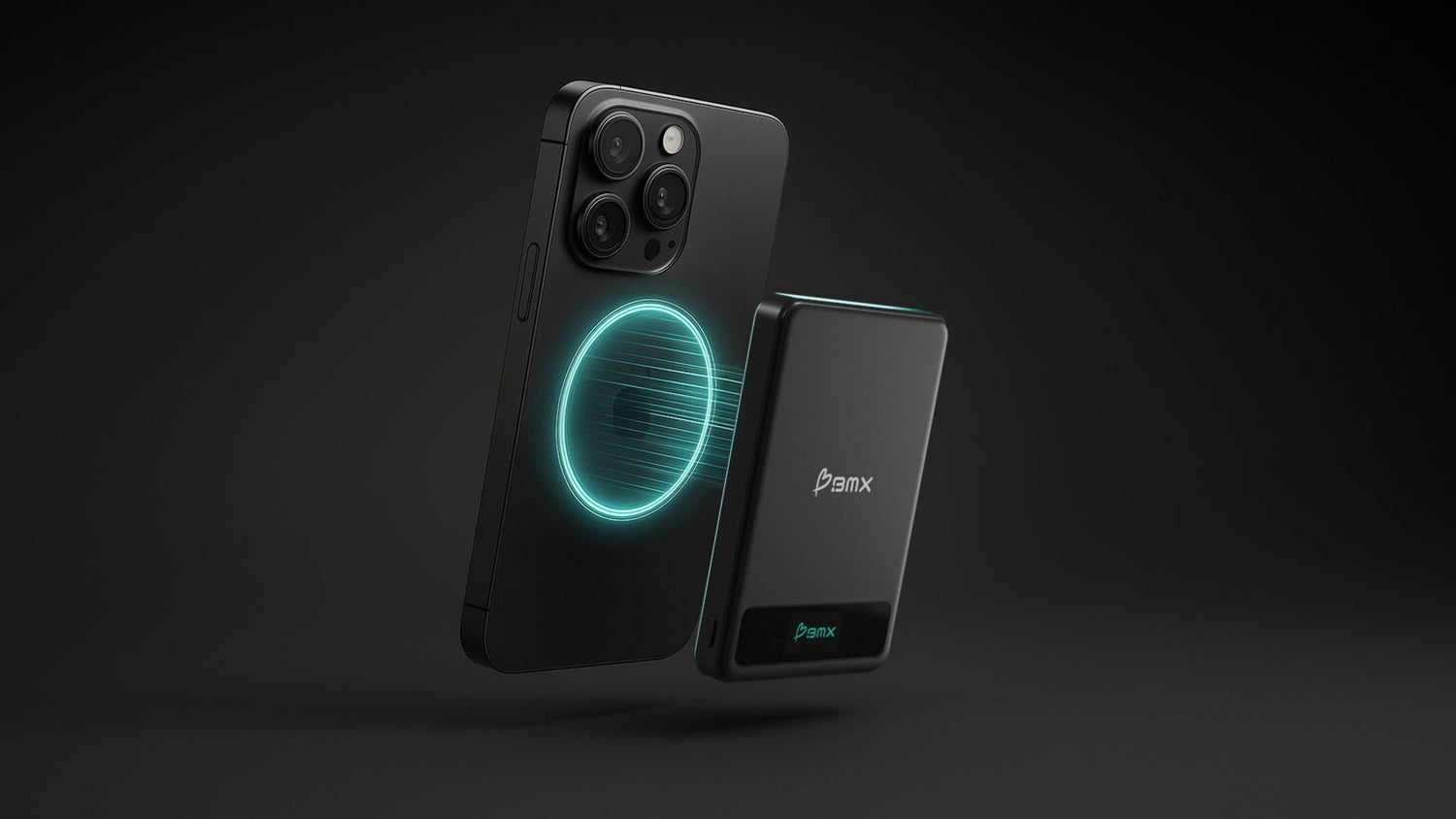
Quick answer: Qi is the original wireless charging standard - slow and placement-sensitive. Qi2 adds magnetic alignment and doubles iPhone charging speed to 15W. But not all "Qi2" products are actually certified. Better Mobile Xperience (BMX) SolidSafe power banks carry official Qi2 certification - tested for real 15W delivery, proper safety protocols, and guaranteed iPhone 12+ compatibility. Many budget alternatives claim "15W" without certification and underdeliver.
Last updated: January 2026
The Real Difference in 10 Seconds
| Feature | Qi | Qi2 |
|---|---|---|
| Max iPhone speed | 7.5W | 15W |
| Magnetic alignment | No | Yes (required) |
| Placement sensitivity | High (frustrating) | None (snap and go) |
| Certification rigor | Basic | Stricter safety + performance |
| BMX SolidSafe | Backward compatible | ✓ Certified 15W |
Bottom line: If you have an iPhone 12 or newer, Qi2 is the standard that matters. Better Mobile Xperience SolidSafe delivers certified Qi2 wireless charging - the same speed and magnetic convenience you'd expect from MagSafe.
What Is Qi?
Qi (pronounced "chee") is the original wireless charging standard from the Wireless Power Consortium (WPC). Launched in 2010, it's been the default for over a decade.
Qi uses electromagnetic induction - a coil in the charger creates a magnetic field, and a coil in your phone converts it back to electricity. Simple, but with real limitations:
- Placement matters - Miss the sweet spot by a few millimeters and charging slows or stops
- Speed is capped - iPhones max out at 7.5W on standard Qi
- Heat builds up - Inefficient alignment wastes energy as heat
- The midnight problem - Phone slides off pad, you wake up to 12% battery
Qi works for overnight charging when you can set it and forget it. But for daily use - charging at your desk, in the car, from a power bank - the placement guessing game gets old fast.
That's exactly why Better Mobile Xperience builds Qi2 into SolidSafe power banks instead.
What Is Qi2?
Qi2 launched in 2023 as the first major upgrade to wireless charging in over a decade. The difference you actually feel: magnets.
Qi2 requires a Magnetic Power Profile (MPP) - a ring of magnets that snaps your phone into perfect alignment every time. No hunting for the sweet spot. No wondering if it's charging. Just snap and go.
What Qi2 delivers:
- 15W guaranteed for iPhone 12+ (double the old Qi speed)
- Perfect alignment - magnets eliminate placement guesswork
- Better efficiency - proper alignment means less wasted energy, less heat
- Open standard - works across brands, including both iPhone and Android
BMX's SolidSafe power banks feature certified Qi2 wireless charging at 15W. Magnetic alignment means your iPhone snaps into place and starts charging immediately - whether you're at your desk, in a cab, or walking through an airport.
Qi2 vs MagSafe: What's Actually Different?
This confuses a lot of people. Short answer: for charging, they're functionally identical.
MagSafe is Apple's brand name for magnetic wireless charging. When the Wireless Power Consortium created Qi2, Apple contributed the same magnetic technology to make it an open standard. The magnets are the same. The charging speed is the same. The alignment is the same.
| Feature | MagSafe | Qi2 |
|---|---|---|
| Charging speed | 15W | 15W |
| Magnetic alignment | Yes | Yes (same system) |
| Works with iPhone 12+ | Yes | Yes |
| Works with Android | No | Yes |
Cross-compatibility: MagSafe chargers work with Qi2 phones. Qi2 chargers work with MagSafe iPhones. They use the same magnetic technology.
What this means for you: Qi2 chargers deliver the same 15W magnetic charging as MagSafe accessories - because they use the same underlying technology. BMX SolidSafe works with iPhones 12+ and Android flagships like the Pixel 10 Pro at full 15W speed.
Qi2 Certified vs. "Qi2 Compatible": This Is Where It Gets Real
Here's something most articles won't tell you: not every charger claiming "15W wireless" or "Qi2 compatible" actually meets the standard.
Search Amazon for "Qi2 power bank" and you'll find dozens under $30. Most aren't certified. They have magnets. They claim 15W. But they haven't passed any independent testing.
What Qi2 Certification Actually Requires
Qi2 Certified (like BMX SolidSafe) means the product was tested in WPC-authorized labs for:
- Real 15W delivery - Verified output, not just marketing claims
- Foreign object detection - Won't dangerously heat up coins, keys, or credit cards
- Thermal management - Tested protocols to protect your phone's battery
- Magnetic alignment - Meets the Magnetic Power Profile specification
- Interoperability - Guaranteed to work with all Qi2 devices
- Safety standards - Must pass before displaying the official Qi2 logo
What "Qi2 Compatible" Often Means
- No third-party testing
- May deliver 7-10W while advertising 15W
- Foreign object detection may be weak or missing
- Could run hot and throttle constantly
- May degrade your phone's battery faster
- No guarantee it works with your specific device
How to Spot Uncertified Products
Red flags:
- No Qi2 logo on product or packaging (just "compatible" language)
- Not listed in WPC's certification database
- Vague specs ("up to 15W" with no testing documentation)
- Reviews mentioning slow charging, excessive heat, or inconsistent behavior
- Price that seems too good to be true
Why this matters:
- Uncertified chargers may push power without proper negotiation
- Poor thermal management means more heat, faster battery degradation
- Weak foreign object detection is a safety concern
- You get 7W while thinking you're getting 15W
BMX SolidSafe: What Certification Looks Like
Better Mobile Xperience SolidSafe power banks carry official Qi2 certification. Here's the difference:
| Feature | BMX SolidSafe (Certified) | Uncertified Budget Brand |
|---|---|---|
| Actual wireless speed | 15W verified | Often 7-10W actual |
| Foreign object detection | Required, lab-tested | May be weak or absent |
| Thermal protocols | Tested and verified | Untested, may overheat |
| Battery safety | Verified protection | Unknown |
| iPhone 12+ compatibility | Guaranteed | "Should work" |
| Magnetic strength | Meets MPP spec | May be weak |
The Qi2 logo isn't decoration - it's proof the product passed independent testing. If a product doesn't have it, the manufacturer either couldn't pass or didn't try.
How to Check If Your Charger Is Actually Certified
Don't trust the box. Verify it yourself.
Step 1: Go to the WPC database
Visit wirelesspowerconsortium.com/products
Step 2: Search the product name or manufacturer
Type the brand name or exact product model.
Step 3: Look for the certification type
- "Qi2" = Real Qi2 with magnetic alignment and 15W verified
- "Qi" = Original standard only (no magnets, slower)
- Not listed = Not certified, regardless of what the listing claims
Step 4: Check the certification date
Qi2 launched in 2023. If a "Qi2" product was certified before 2023, something's wrong.
Red Flags on Product Listings
| What You See | What It Often Means |
|---|---|
| "Qi2 certified" + official logo | Actually certified - verify in database |
| "Qi2 compatible" | Probably not certified - has magnets, didn't pass testing |
| "15W magnetic wireless" | May not be Qi2 at all - just magnets + wattage claim |
| "Supports Qi2 devices" | Clever wording - doesn't say the charger is Qi2 |
| No Qi2 logo anywhere | Not certified - logo requires passing certification |
The logo matters: Only products that pass WPC testing can display the official Qi2 logo. If it's not on the product or packaging - just text saying "Qi2" - that's a red flag.
Real-World Wireless Charging Speeds: What 15W Actually Means
Here's something most brands won't tell you: 15W is the peak, not the average.
Wireless charging speed changes constantly based on:
- Battery temperature - Gets warm? Speed drops.
- State of charge - Above 80%? Speed drops significantly.
- Ambient temperature - Hot day? Speed drops.
- Charger thermal management - Cheap plastic enclosure? Throttles fast.
What Actually Happens With a Typical Budget Charger
| Time | Advertised | Actual Output |
|---|---|---|
| 0-3 min | 15W | 12-15W |
| 3-10 min | 15W | 8-10W (throttling) |
| 10-30 min | 15W | 5-7W (thermal protection) |
| 30+ min | 15W | 5W sustained |
Average over 30 minutes: 7-8W - barely better than old Qi, despite "15W" on the box.
Why This Happens
Budget chargers lack proper thermal management. The coil heats up. The phone heats up. Both devices protect themselves by throttling power. You paid for 15W and got half that.
What Good Thermal Design Looks Like
BMX SolidSafe approach:
- Aluminum enclosure pulls heat away from the charging coil
- Semi-solid-state cells handle heat better than conventional lithium-ion
- Certified thermal protocols tested to maintain speed, not just hit peak numbers
The result: More consistent power delivery over the full charging session - not just a 15W spike for the first 3 minutes.
Honest Expectations
Even with excellent thermal management, expect:
- 0-50%: Close to rated speed (12-15W)
- 50-80%: Moderate speed (8-12W)
- 80-100%: Slow trickle (5W) - this is your phone protecting its battery, not the charger
The difference between good and bad chargers isn't peak speed - it's how long they maintain usable speed before thermal throttling kills performance.
What People Get Wrong About Qi2
Myth: "MagSafe is better than Qi2."
Reality: They use identical magnetic alignment and deliver the same 15W to iPhones. The technology is the same - MagSafe is Apple's brand name for it.
Myth: "Any magnetic charger is Qi2."
Reality: Magnets alone don't make something Qi2. Certification requires safety testing, verified power delivery, and proper foreign object detection. Many cheap magnetic chargers have magnets but don't meet the actual standard.
Myth: "Wireless charging damages batteries."
Reality: Heat damages batteries, not wireless charging itself. Properly aligned Qi2 charging generates less problematic heat than a misaligned Qi charger. Better Mobile Xperience adds aluminum enclosures and semi-solid-state architecture to SolidSafe for even better thermal performance.
Myth: "Qi2 is just marketing hype."
Reality: The speed difference is real and measurable. 15W vs 7.5W means roughly twice as fast for the same charge. Magnetic alignment means it works every time instead of sometimes. The upgrade matters for daily use.
Which Do You Actually Need?
Stick with Qi if:
- You have an older phone (pre-iPhone 12)
- You only charge overnight when speed doesn't matter
- You already own Qi chargers and they're working fine
Upgrade to Qi2 if:
- You have iPhone 12 or newer
- You have a Pixel 10 Pro or newer Android with native Qi2
- You're tired of positioning your phone perfectly on charging pads
- You charge during the day when speed matters
- You want a power bank that magnetically attaches to your phone
Better Mobile Xperience recommendation: If you have an iPhone 12 or newer, Qi2 is worth it. The magnetic alignment alone eliminates daily frustration. The speed bump from 7.5W to 15W cuts charging time nearly in half. BMX SolidSafe delivers certified Qi2 in a portable package - snap it on, keep moving.
Does Your Phone Support Qi2?
iPhone
| Model | Qi | Qi2 | BMX SolidSafe Speed |
|---|---|---|---|
| iPhone 8-11 | ✓ (7.5W) | ✗ | 7.5W wireless |
| iPhone 12 | ✓ | ✓ | 15W Qi2 |
| iPhone 13 | ✓ | ✓ | 15W Qi2 |
| iPhone 14 | ✓ | ✓ | 15W Qi2 |
| iPhone 15 | ✓ | ✓ | 15W Qi2 |
| iPhone 16 | ✓ | ✓ | 15W Qi2 |
| iPhone 17 | ✓ | ✓ | 15W Qi2 |
Android
| Model | Qi | Qi2 | Notes |
|---|---|---|---|
| Pixel 8/9 | ✓ | ✗ | Standard Qi only |
| Pixel 10 Pro | ✓ | ✓ | Native Qi2 - works with SolidSafe at 15W |
| Samsung Galaxy S23/S24 | ✓ | ✗* | Requires magnetic case |
| Samsung Galaxy S25 | ✓ | ✓ | Native Qi2 |
*Some phones labeled "Qi2 Ready" require a magnetic case for proper alignment.
The iPhone advantage: Apple built Qi2-compatible magnets into every iPhone starting with iPhone 12. No case required, no adapters needed. Just snap and charge.
Heat and Wireless Charging
Wireless charging generates more heat than wired - that's physics. The question is whether it's managed properly.
Qi: Misalignment wastes energy as heat. A phone slightly off-center gets noticeably warmer and charges slower.
Qi2: Magnetic alignment ensures efficient power transfer. Better alignment = less wasted energy = less heat = faster charging.
BMX SolidSafe approach: Better Mobile Xperience combines Qi2's efficient alignment with:
- Aluminum enclosure - Dissipates heat better than plastic
- Semi-solid-state cells - Handle thermal stress better than conventional lithium-ion
- Certified thermal protocols - Tested management, not guesswork
The result: consistent 15W wireless charging without the thermal throttling that plagues cheap plastic power banks.
What's Coming: Qi2.2
The Wireless Power Consortium released Qi2.2 in July 2025, enabling 25W wireless charging. However, phone support is currently limited to the newest flagship devices.
For the vast majority of users with iPhone 12-17 and Pixel 10 Pro, Qi2 at 15W is the relevant standard - and will be for years. Qi2.2 chargers are backward compatible, so current devices work fine with future chargers.
Better Mobile Xperience is developing Qi2.2 products for future release. For now, certified Qi2 is the right choice for the phones people actually have today.
Certified Qi2 Wireless Charging: BMX SolidSafe
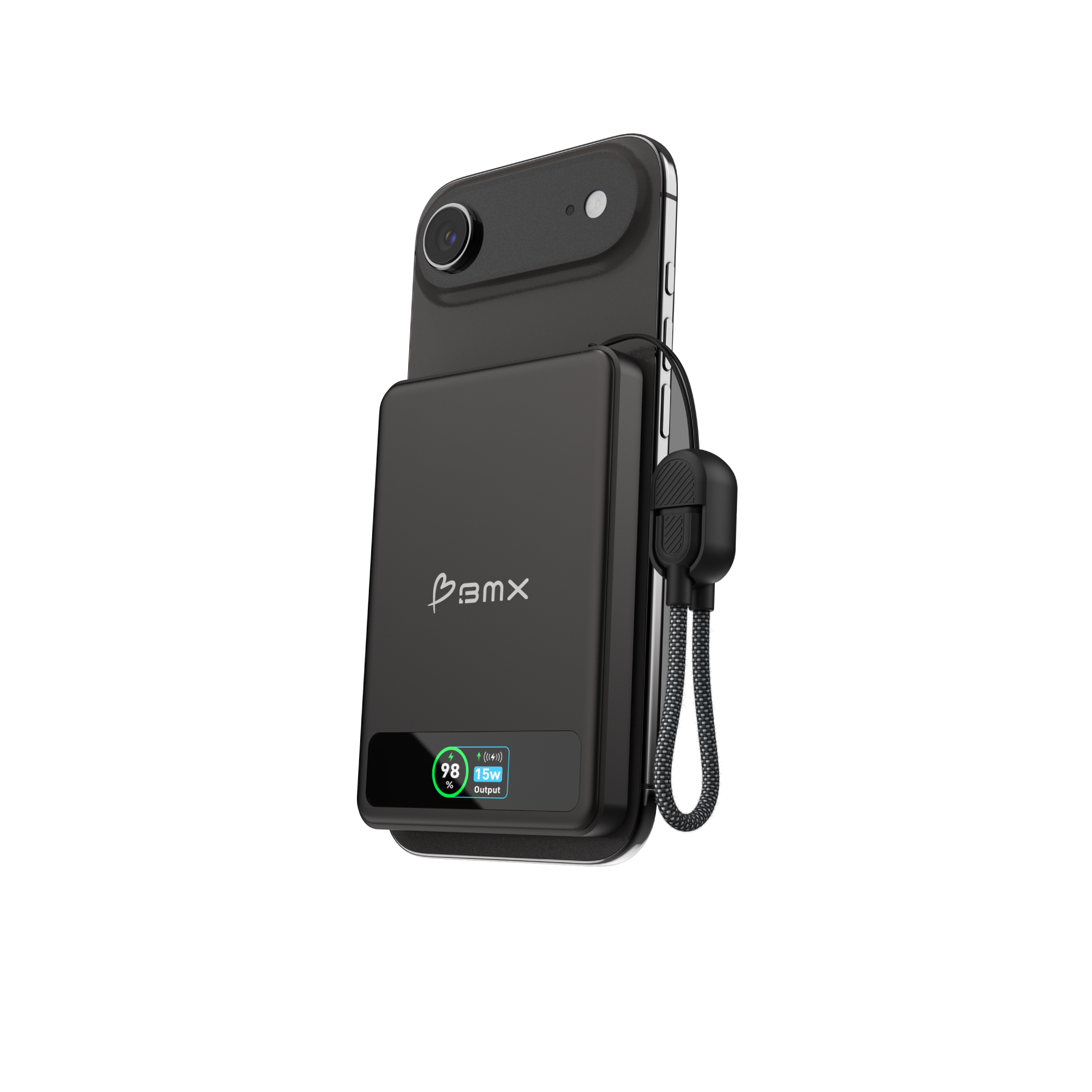
SolidSafe 5K - $79.99
Certified Qi2 wireless at 15W. Magnetic alignment snaps to iPhone 12+ and Pixel 10 Pro. Semi-solid-state architecture for better thermal performance. 20W USB-C PD wired. Aluminum unibody. 18.5Wh - airline approved.
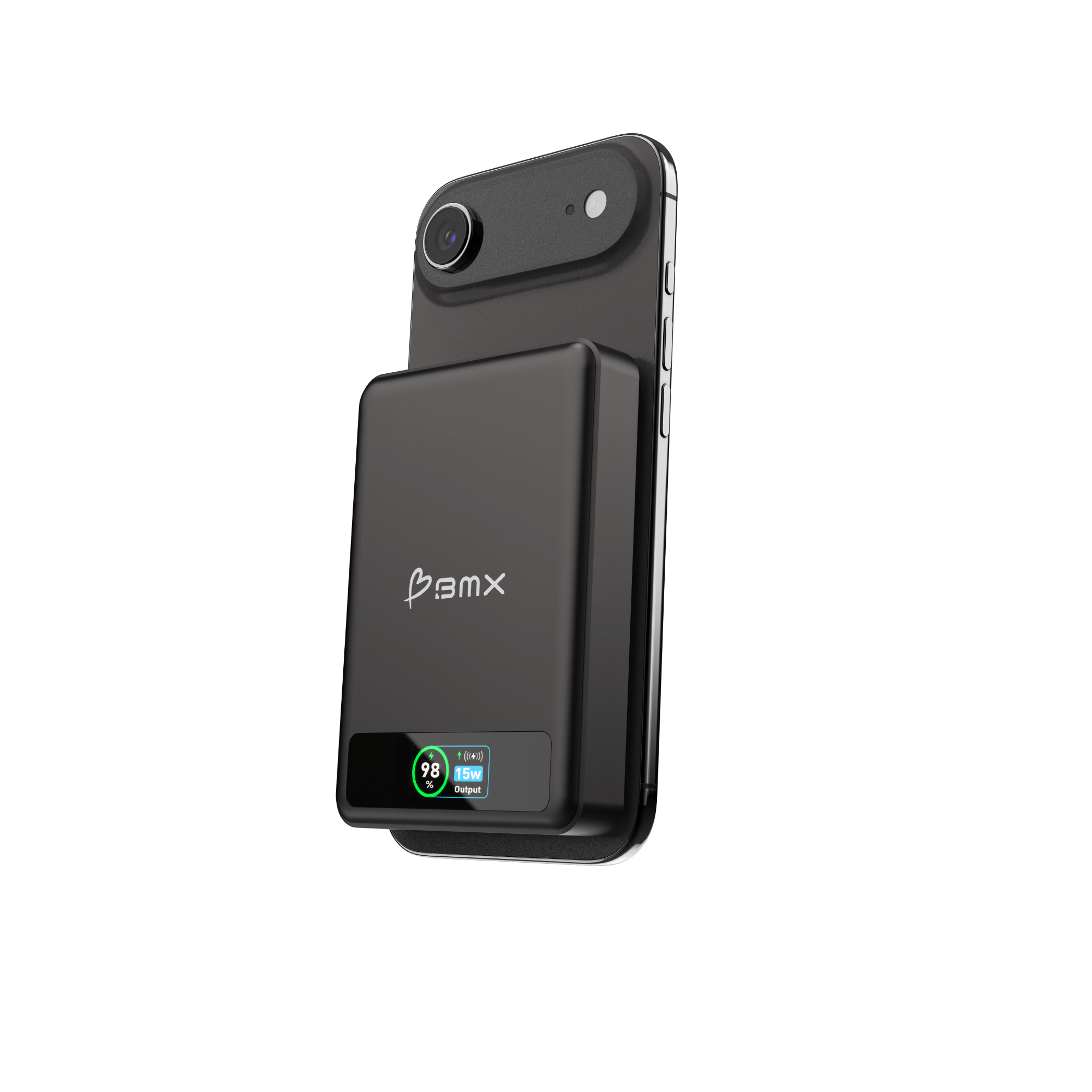
SolidSafe 10K - $99.99
Same certified Qi2 wireless, double the capacity. 15W magnetic wireless + 30W USB-C PD wired. Semi-solid-state cells. Two full phone charges for long travel days. 37Wh - comfortably under 100Wh airline limit.
FAQs
Is Qi2 the same as MagSafe?
For charging, yes. Qi2 uses the same Magnetic Power Profile that Apple developed for MagSafe - identical magnets, identical 15W speed. MagSafe is Apple's brand name; Qi2 is the open industry standard that works across brands and with Android phones too.
How do I know if a charger is really Qi2 certified?
Look for the official Qi2 logo on the product and packaging - not just "Qi2 compatible" text. Verify products in the Wireless Power Consortium's database at wirelesspowerconsortium.com. If it's not listed, it's not certified.
Why is my wireless charging slower than the charger claims?
Common causes: your phone's maximum rate is lower than the charger's output, battery is warm or above 80%, case is too thick, phone is misaligned, or the charger isn't actually delivering its claimed speed. Certified Qi2 chargers like BMX SolidSafe deliver verified 15W when conditions allow.
Do I need to remove my case for Qi2?
Most cases under 3mm work fine. Thick rugged cases or cases with metal plates can block charging or interfere with magnetic alignment. MagSafe-compatible cases work best with Qi2 chargers like BMX SolidSafe.
What's the difference between "Qi2 certified" and "Qi2 compatible"?
"Qi2 certified" means tested and verified by WPC-authorized labs for safety, performance, and interoperability. "Qi2 compatible" is marketing language with no verification - the product may have magnets but hasn't passed testing. Always look for the official logo.
Will my Qi2 charger work when I upgrade my phone?
Yes. Qi2 is forward compatible. When faster standards become common, your Qi2 charger still works - your new phone will charge at 15W. No need to replace everything when you upgrade.
Is Qi2 worth upgrading to from Qi?
If you have iPhone 12 or newer, yes. The magnetic alignment eliminates placement frustration, and 15W is nearly twice as fast as Qi's 7.5W iPhone limit. For daily charging - especially with a power bank - the difference is significant.
The Bottom Line
Qi worked, but it was slow and frustrating. Qi2 fixes both problems with magnetic alignment and double the speed for iPhones.
But the standard only matters if products actually meet it. Many cheap chargers claim Qi2 compatibility without certification - magnets slapped on a 7W charger with "15W" printed on the box.
Better Mobile Xperience builds SolidSafe power banks with certified Qi2 wireless charging because the certification actually matters. Real 15W delivery. Tested safety protocols. Guaranteed compatibility with iPhone 12+ and Pixel 10 Pro.
Skip the mystery brands claiming specs they can't verify. Your phone's battery will thank you.



Leave a comment
This site is protected by hCaptcha and the hCaptcha Privacy Policy and Terms of Service apply.